
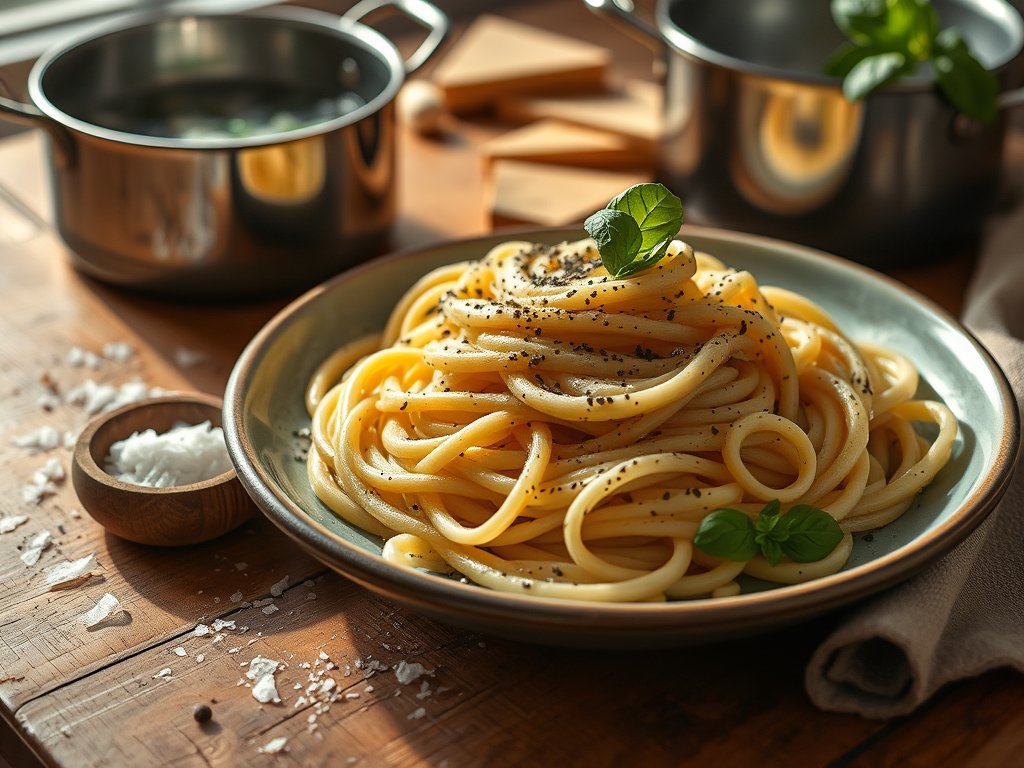
Before my neighbor, friend, an amazing cook and of course, Italian, David Galligani, came into my life and taught me how to truly cook pasta, I used to make some mistakes that would horrify any Italian:
- I bought average, sometimes even the cheapest, pasta.
- I added salt to the water before it even started boiling.
- I rinsed my pasta after cooking to stop the temperature from rising.
- I cooked the sauce separately in a different pan and mixed it with the pasta afterward—like two strangers meeting for the first time and trying to connect.
However, after a few “cooking for dummies” lessons from David, I felt like I had mastered the technique. (The feeling is always important—of course, I’m an amateur and haven’t truly mastered the essence of Italian cuisine.) Nevertheless, my pasta improved significantly, and ever since I started cooking it for others, I’ve been admired and loved!
So, let me share my favorite recipe—one that, to me, embodies the simplicity and elegance of Italian pasta. There are no precise measurements here; I follow the most famous mom’s method: “You’ll understand with your eyes and instinct.” And, as a true cooking enthusiast and a stubborn Greek, I’ve added a few of my own twists. (Hope my Italian friends won’t be offended!)
Cacio e Pepe
Ideally for two servings—just you and your date!
- Bring out your biggest pot—don’t even think about using a small one! Pasta needs space and love to cook properly. You don’t want a messy kitchen with boiling water spilling over.
- Cover the pot with a lid and wait patiently for the water to boil (it will heat up faster this way).
- Once the water is boiling, add a generous amount of salt.
- When it’s at a rolling boil, add the pasta. (For heaven’s sake, don’t break it!) Stir a bit to ensure the pasta doesn’t stick together.
- Check the cooking time on the package and boil the pasta for two minutes less than stated—we’ll finish cooking it in the sauce!
- Now, it’s time to multitask! When the pasta is halfway through boiling, start preparing the sauce. The ingredients are simple: black pepper and Parmigiano-Reggiano (Here is my twist! The original recipe is with Pecorino Romano.)
- Heat a dry pan over medium heat and toast the black pepper. Let it toast for a moment to release its aromas. (The amount of pepper depends on how spicy and peppery you like your pasta.)
- When the pepper smells fragrant, add a ladle of the pasta water—this is the magic ingredient! (Never rinse your pasta! Instead, drain it while saving a cup of the pasta water for the sauce.)
- Let the pasta water blend with the pepper, then add the star of the dish: Parmigiano-Reggiano! Think of this cheese as the charming, sociable friend who brings everyone together. Start with about half a cup of grated cheese.
- Stir until it forms a smooth, creamy sauce. If the consistency isn’t quite right, add a little more cheese or pasta water to adjust.
- Add the drained pasta to the pan along with 3-4 more tablespoons of pasta water. Let everything cook together for two minutes so the flavors can meld. Remove the pan from the heat. Add extra cheese, let it melt, and your pasta is ready to serve!
I hope you enjoy this dish as much as my loved ones and I do. The only ingredients you need are good-quality pasta, salt, black pepper, Parmigiano-Reggiano, pasta water, and the feeling that you’re creating something simple yet special.
For a truly authentic Italian culinary experience straight from the heart of Tuscany, you can explore the flavors, aromas, and passion of a full menu crafted by David Galligani.
For more information, visit: https://www.theredetruscan.com/
What’s your favorite pasta recipe?
 Alexandra Konstanti
Leave a comment